Insurance Claim Coordination for Roofing Companies
Last updated: March 2026
Overview
Insurance claims are where roofing jobs go to die slowly. You've got a signed contract, a homeowner ready to move forward, and then... weeks of waiting. The adjuster schedules a site visit. Reschedules. Requests more documentation. Meanwhile, your project manager fields daily calls from anxious homeowners asking the same question: "When will my roof get fixed?"
The coordination triangle between homeowner, insurance adjuster, and your crew creates a communication nightmare. Each claim requires an average of 7 phone calls and follow-ups to resolve. Your PMs spend hours chasing status updates instead of managing active jobs. And here's what really hurts: without professional advocacy and solid documentation, insurers pay 20-50% less than the claim is actually worth.
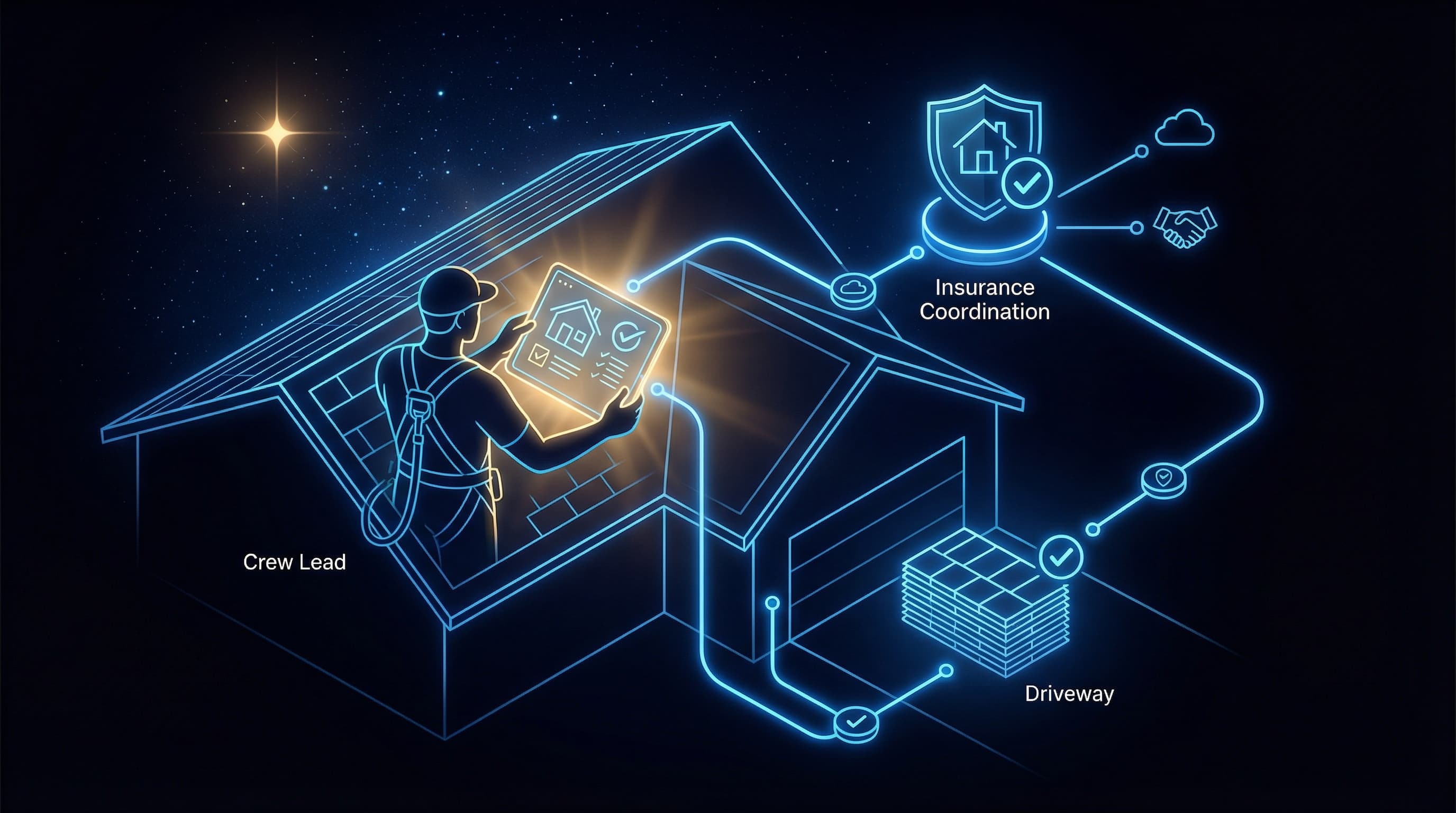
This page shows you how automated claim coordination eliminates the phone tag, creates bulletproof documentation, and keeps everyone informed without burning out your best people. You'll see exactly how the system works, step by step, and what results roofing companies are getting when they stop treating insurance coordination like a manual process.
The Problem
The average insurance claim takes 2-6 weeks to process, with adjuster review alone eating 14-30 days. During that window, your project managers make 7+ calls per claim just to keep things moving. After $60 billion in storm damage in 2023, adjusters are overworked and timelines keep stretching. Insufficient documentation remains the number one cause of claim delays and underpayment—and insurers routinely pay 20-50% less than owed when contractors can't prove their case.
The Solution
Elevasis automates the entire claim communication flow between your team, the homeowner, and the adjuster. The system sends automated status updates at every milestone, cutting anxious homeowner calls by 40-60%. It creates timestamped digital documentation—photos, measurements, damage assessments—that reduces claim disputes by over 50%. And it handles adjuster meeting scheduling automatically, saving your project managers 3-5 hours per week per active claim.
How It Works
- 1
Claim intake captures all damage details
When you create a new insurance job, the system pulls in homeowner contact info, policy details, and initial storm damage assessment notes. Everything lives in one place from day one.
- 2
Automated updates notify all parties at milestones
As your crew completes inspections, submits supplements, or schedules adjuster visits, the system texts and emails the homeowner automatically. No more "just checking in" calls flooding your office.
- 3
Digital documentation builds the claim file
Photos, measurements, and timeline notes sync from CompanyCam or your field tools into a timestamped record. This paper trail proves scope and prevents underpayment disputes.
- 4
Adjuster scheduling happens without phone tag
The system coordinates availability between your crew and the adjuster, sends calendar invites, and confirms appointments. Reschedules trigger automatic notifications to all parties.
- 5
Claim status dashboard shows every job at a glance
Your PMs see which claims are waiting on adjuster review, which need supplement documentation, and which are approved and ready to schedule. Nothing falls through the cracks.
Results
Roofing companies using automated claim coordination see homeowner anxiety calls drop by 50%, freeing front office staff for higher-value work. Claim cycle times shrink by 20-30% because nothing stalls waiting for someone to make a phone call. Project managers recover 4 hours per week per active claim, and digital documentation with timestamps cuts claim disputes by more than half.
Frequently Asked Questions
The system detects calendar changes and immediately notifies your crew and the homeowner with updated timing. It also logs the reschedule in the claim file, creating a record if delays become a pattern that affects the timeline.
Absolutely. Automation handles routine status updates, but your team stays available for complex questions or concerns. The difference is your PMs handle exceptions instead of repeating the same update 15 times a day.
The system tracks each claim separately while recognizing adjuster relationships. It can batch scheduling requests when you have several properties in the same area, making site visits more efficient for everyone.
Most roofing companies are running within 2-3 weeks. The system connects to your existing tools like AccuLynx, JobNimbus, or CompanyCam, so you're not rebuilding your workflow from scratch.
Yes. Every photo, measurement, and note gets timestamped and organized in a format adjusters recognize. When you submit a supplement for additional shingle replacement or drip edge damage, you have the evidence already assembled.
The system adapts to different carrier timelines and documentation requirements. You can customize milestone triggers and notification content based on whether you're dealing with a State Farm claim versus a regional carrier.
Ready to Automate Your Business?
Show me how automated claim coordination works—book a 15-minute demo.