Fleet & Insurance Billing Automation for Towing Companies
Last updated: March 2026
Overview
You finished a fleet account tow at 11 PM. Now you're sitting at your desk at midnight, copying information from your dispatch log into an invoice. Vehicle description. Pickup location. Mileage. Authorization number. Photos uploaded separately. Twenty-two minutes later, you have one invoice ready to send. You have fourteen more to do this week.
This is the reality for most towing company owners. With 78% of towing businesses being independent operators and most running with 1-5 employees, there's no dedicated billing staff. The person answering calls, dispatching trucks, and sometimes driving them is also the person creating invoices at the end of the day. Fleet accounts and insurance companies demand specific documentation—photos, GPS coordinates, timestamps, authorization codes. Miss any piece and the invoice gets kicked back. Disputed invoices cost two to three times the admin time of clean ones.
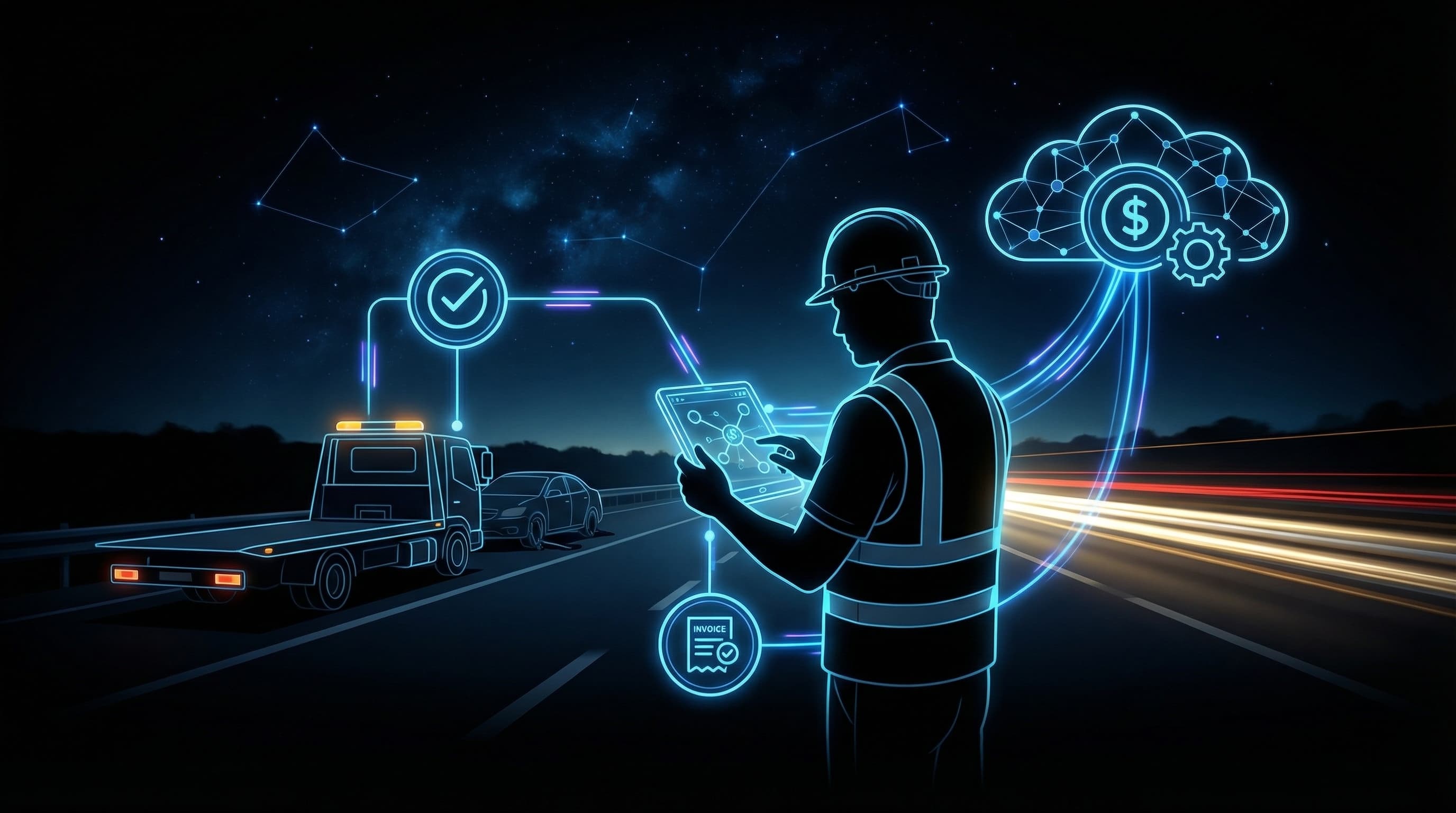
Billing automation changes this equation entirely. When your dispatch system captures all the required information at the point of service, invoices generate themselves. The documentation that fleet managers and insurance adjusters require is already attached. Payment cycles compress from weeks to days. This page shows you exactly how automated billing works for towing companies and what it means for your cash flow.
The Problem
Manual invoice creation takes 15-30 minutes per tow when you're pulling data from dispatch logs. Industry benchmarks show 5-10% of manually entered invoices contain errors that trigger disputes or payment delays. Paper-based billing cycles stretch 30-60 days to payment, strangling your cash flow while you wait. You're tracking multiple billing formats—motor clubs, insurance companies, fleet accounts, and private pay—each with different requirements and documentation standards.
The Solution
Elevasis connects to your dispatch system and automatically generates invoices the moment a tow is complete. Photos, GPS coordinates, timestamps, and authorization codes attach to each invoice without manual entry. The system formats invoices correctly for each payer type—whether it's an insurance claim, a fleet account, or a motor club reimbursement. Integration with QuickBooks and other accounting software eliminates double-entry, so your books stay current without extra work.
How It Works
- 1
Dispatch Data Captures Every Detail at Service
Your driver completes the tow and the dispatch system records location, mileage, timestamps, and service type. Photos and authorization codes sync automatically—no clipboard required.
- 2
System Identifies Payer and Billing Requirements
Elevasis recognizes whether this tow bills to a fleet account, insurance company, motor club, or private customer. Each payer's specific documentation requirements are applied automatically.
- 3
Invoice Generates with Complete Documentation
A formatted invoice creates itself with all required fields populated. GPS verification, photos, timestamps, and authorization codes attach without manual uploads.
- 4
Electronic Delivery Speeds Payment Cycle
Invoices route electronically to the correct billing contact. Fleet accounts and insurance adjusters receive documented invoices within hours, not days.
- 5
Accounting Integration Eliminates Double Entry
Invoice data syncs directly to QuickBooks or your accounting system. Receivables update automatically and you see real-time cash flow status without manual reconciliation.
Results
Towing companies using automated billing see invoice errors drop by 80-90% and admin time per invoice decrease by 60-70%. Payment cycles compress from 30-60 days down to 7-14 days, freeing working capital that used to sit in accounts receivable. Disputed invoices drop by more than 50% when GPS and photo documentation attach automatically to every bill.
Frequently Asked Questions
The system handles non-standard tows like winch-outs, recoveries, and specialty equipment charges. You can create custom service types with specific billing rules. If something truly unusual comes through, you can manually adjust before the invoice sends.
Yes. Automated billing doesn't lock you out of manual control. You can edit any generated invoice, create invoices from scratch, or hold invoices for review before sending. The system handles routine billing while you keep oversight of exceptions.
Elevasis maintains separate billing rules for each motor club—AAA, Agero, Allstate, and others. When a motor club dispatch comes through, the system applies that club's specific rate schedule and documentation requirements. Each club gets invoices in their required format.
Most towing companies are processing automated invoices within two weeks. The first week covers integration with your dispatch system and accounting software. The second week involves configuring billing rules for your specific payers and training your team.
The system prompts drivers through a mobile app when required documentation is missing. For fleet and insurance tows, the app won't mark the job complete until photos upload. This prevents documentation gaps before they become billing problems.
Yes. Elevasis connects with major towing dispatch platforms including Towbook, ProTow, TOPS, Beacon, and Dispatch Anywhere. The integration pulls dispatch data directly, so you don't change how your drivers work—you just stop retyping everything into invoices.
Ready to Automate Your Business?
Show me how billing automation works for my towing company. Book a 15-minute demo.