Vendor Coordination for HOA & Property Management
Last updated: March 2026
Overview
Community managers spend 3-5 hours per week per community on vendor coordination—collecting bids, chasing insurance certificates, waiting for board approvals, and reconciling invoices. Multiply that across a typical 10-15 community portfolio, and you're looking at 30-50 hours of monthly administrative work that doesn't directly serve residents.
The manual approach creates real liability exposure. According to CAI research, 30-35% of vendor files are missing at least one compliance document, whether that's current insurance, proper licensing, or updated certificates. When an uninsured vendor causes damage, your association faces $5,000-$50,000+ in deductible exposure—a preventable risk that automation eliminates entirely.
This guide shows you exactly how automated vendor coordination works for HOA and property management, from initial bid requests through invoice reconciliation. You'll see specific time savings, understand which bottlenecks disappear, and learn how the system integrates with platforms like AppFolio, Buildium, and CINC Systems.
The Problem
Collecting three competitive bids takes 5-10 business days through traditional phone and email outreach, and 40-50% of projects below board threshold proceed without formal bid comparison. Your vendor files likely have gaps: industry data shows 30-35% are missing current insurance certificates or licenses. Board approval delays add another 7-14 days when a full meeting is required, and 20-25% of vendor invoices contain errors requiring correction. This coordination burden consumes 3-5 hours weekly per community—time community managers can't spend on residents or property issues.
The Solution
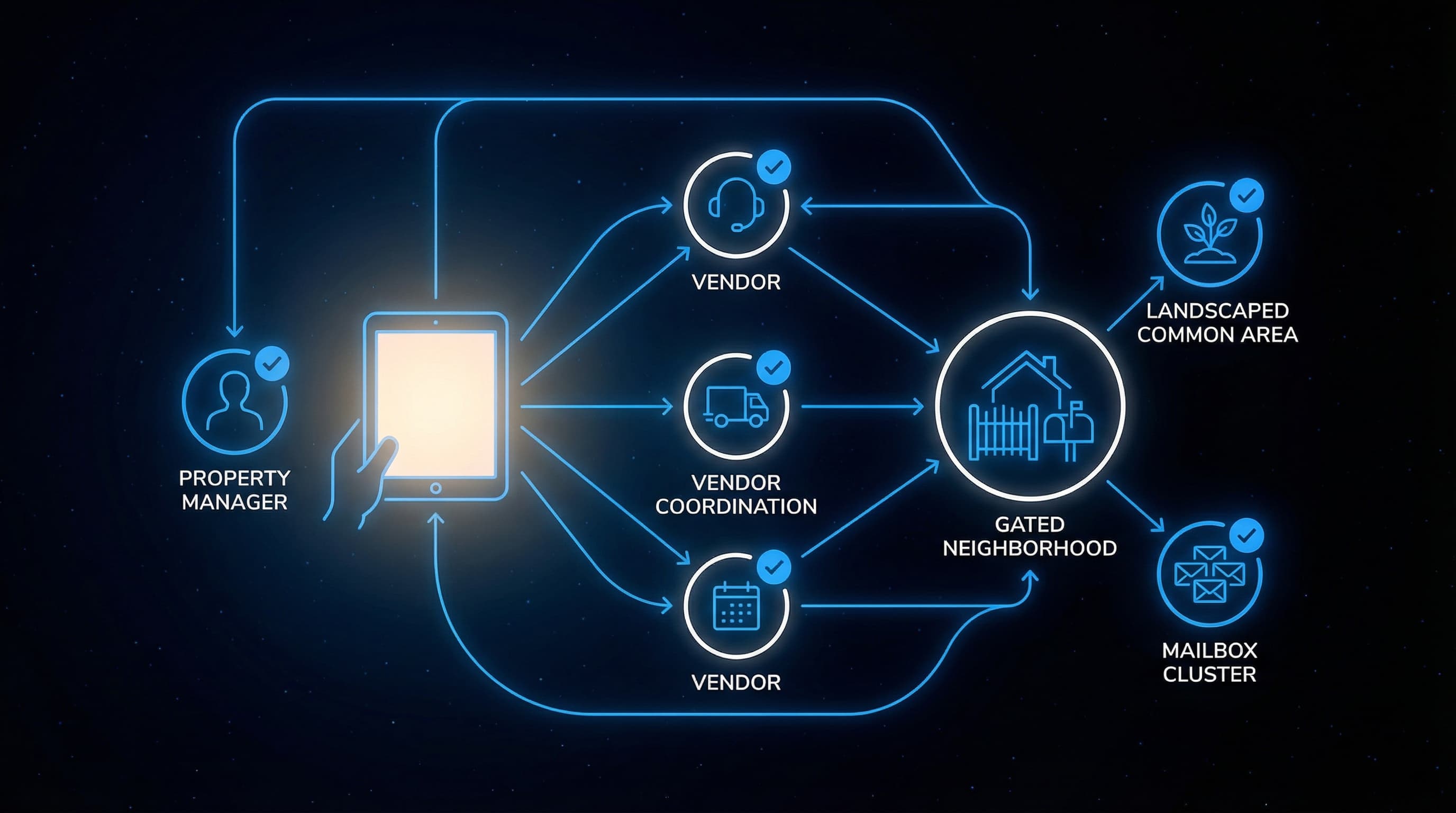
Elevasis automates the entire vendor coordination lifecycle from bid request through payment approval. The system broadcasts bid requests to qualified vendors simultaneously, collecting responses in 1-2 days instead of 5-10 days while maintaining a complete audit trail. Automated compliance monitoring tracks insurance certificates and licenses, flagging expirations before they create liability gaps. Electronic approval workflows route proposals to board members with comparison summaries, reducing approval cycles from 7-14 days to 24-48 hours. The platform integrates with your existing property management software to sync vendor data, work orders, and invoice details.
How It Works
- 1
Submit vendor request with project details
When a work order or board directive requires vendor service, you enter project specifications once. The system automatically pulls relevant community data—CC&Rs requirements, insurance minimums, and preferred vendor lists—to filter qualified vendors.
- 2
System broadcasts bid requests to qualified vendors
Rather than calling vendors individually, the platform sends simultaneous requests to pre-qualified vendors with verified compliance status. Vendors respond through a standardized portal, ensuring comparable bids with consistent scope details.
- 3
AI compiles comparison summary for board review
As bids arrive, the system generates side-by-side comparisons highlighting price, timeline, warranty terms, and past performance. This summary routes automatically to designated board members or the approval authority based on project value thresholds.
- 4
Electronic approval routes to board with one-click action
Board members receive mobile-friendly approval requests with all documentation attached. They can approve, request changes, or decline with comments—no meeting required for routine projects. This cuts approval time from 7-14 days to 24-48 hours.
- 5
Compliance and invoice tracking through completion
Once approved, the system monitors vendor insurance and license status throughout the project. Invoice submission triggers automatic matching against the approved bid, flagging discrepancies before payment and maintaining documentation for reserve fund records.
Results
Management companies using automated vendor coordination reduce bid collection time by 70-80%, dropping from 7 days to 1-2 days with complete audit trails. Community managers recover 5-8 hours weekly across a 10-community portfolio—time previously spent on phone calls, email follow-ups, and spreadsheet tracking. Invoice dispute rates drop by 40% through automated bid-to-invoice matching, and compliance gaps effectively disappear with continuous certificate monitoring. Board approval cycles compress from 7-14 days to 24-48 hours using electronic workflows.
Vendor Coordination Automation Results
0%
Bid Collection Time
Faster — 5-10 days to 1-2 days
0%
Manager Time Saved
Across 10-community portfolio per week
0 hrs
Board Approval Time
Down from 7-14 days via electronic workflow
0%
Invoice Dispute Rate
Reduction with automated reconciliation
Source: Vendor Data
Frequently Asked Questions
The system supports on-demand vendor onboarding with automated compliance collection. New vendors receive a portal link to submit insurance certificates, licenses, and W-9 information—reducing onboarding from 2-3 hours to 20-30 minutes. The bid request proceeds once compliance verification completes, typically within 24 hours.
Absolutely. The electronic workflow supplements but doesn't replace board governance. For projects requiring discussion, the system generates meeting-ready comparison packets with all documentation. Board members can also add comments and questions within the approval workflow, creating a documented discussion thread that satisfies governing document requirements.
Each community profile includes its specific insurance thresholds, contractor requirements, and approval authorities. When you initiate a bid request, the system automatically applies that community's rules—filtering vendors by compliance status and routing to the correct approval chain. Multi-community portfolios maintain separate configurations while using a single vendor database.
Most management companies complete implementation in 2-3 weeks. The first week focuses on importing existing vendor data and configuring community-specific requirements. Week two covers approval workflow setup and board member training. By week three, you're processing live bid requests through the system while we provide hands-on support.
Yes, Elevasis connects directly with major property management platforms including AppFolio, Buildium, CINC Systems, TOPS Software, and Caliber. Work orders and vendor records sync automatically, so approved projects flow into your existing systems without duplicate data entry. Invoice details populate for accounts payable processing in your primary platform.
The system monitors certificate expiration dates continuously and sends automated renewal reminders to vendors 30, 14, and 7 days before expiration. If a certificate lapses, you receive immediate notification and the vendor's status updates to non-compliant—preventing new work assignments until documentation is current. This eliminates the compliance gaps affecting 30-35% of vendor files under manual tracking.
Ready to Automate Your Business?
See how vendor coordination automation works with your existing property management software. Schedule a 20-minute demo to walk through bid collection, compliance tracking, and board approval workflows using your actual community data.